
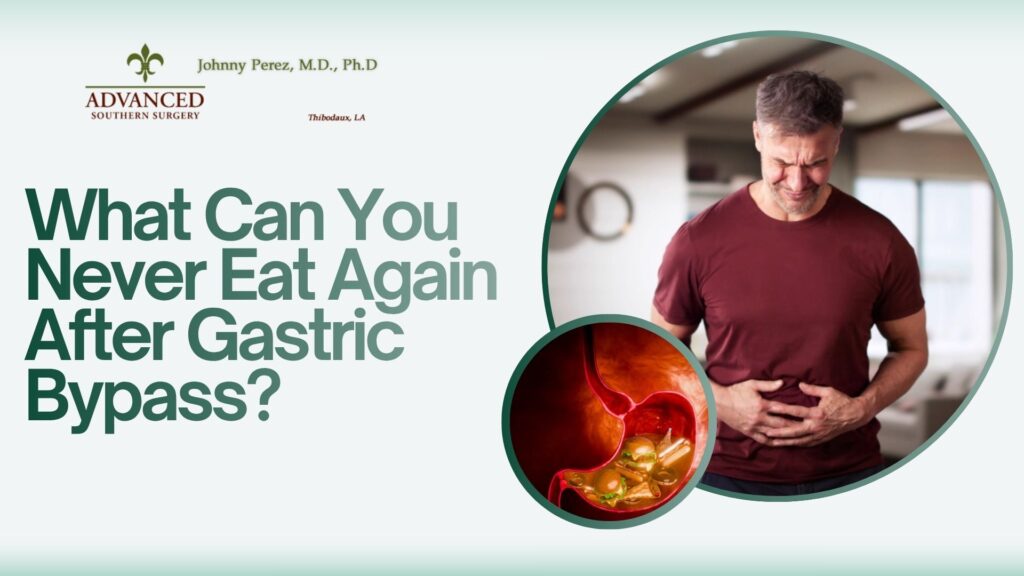
People usually spend months looking into gastric bypass surgery reading up on the operation, the risks, and the recovery. Yet, they often skimp on understanding how their eating habits need to change post-surgery. This is kind of a problem because the new eating requirements aren’t just for the short term; they’re lifelong.
The surgery fundamentally alters how your stomach functions, and here’s why: Surgeons make a tiny stomach pouch about the size of an egg and attach it straight to the small intestine. In this setup, your large stomach is essentially bypassed, along with the initial part of your small intestine.
Why Your Stomach Now Works Differently
During gastric bypass surgery, surgeons create a small pouch from the upper part of your stomach—roughly the size of an egg—and connect it directly to the small intestine. The bulk of your original stomach and the upper section of your small intestine are bypassed entirely.
There are two main differences:
First, the amount of food you can eat goes way down. At first, your new little pouch holds around 1 to 2 ounces, which might expand over time to 4 to 8 ounces.
Second, your body absorbs fewer nutrients since the primary section of the intestine responsible for absorption is skipped.
This second point really matters because it means you’ll need to take vitamins and supplements forever. Also, certain foods that once slid through fine can now cause serious discomfort or worse.
So, your body now handles food totally differently—and it stays that way forever.
Foods You Should Never Eat Again After Gastric Bypass
Eating after gastric bypass? There are some definite foods you should avoid, and the biggest one is anything with high sugar content. I know this is a tough rule to follow, yet it’s super important and tends to catch people off guard.
When high-sugar stuff passes from the smaller stomach area into the small intestine real quick, it drags in fluids, and that sets off something known as dumping syndrome. You’re talking about symptoms hitting in just 15 to 30 minutes—nausea, cramping, sweating, dizziness, and yeah, diarrhea. And this isn’t just occasional; many folks experience this pretty much every single time they eat sweet stuff above a specific limit.
Sugar triggers are everywhere:
– Candy, chocolate, and all those yummy desserts
– Regular soda and fruit juice
– Sweetened yogurt, flavored coffee drinks, and energy drinks
– Ice cream and shakes
– Hidden sugar offenders like granola bars, lots of condiments, sauces, and supposedly healthy protein bars
So always read those labels! Ingredients that point towards trouble include high fructose corn syrup, sucrose, or dextrose, especially when they appear early in the list.
Things You Can’t Do After Gastric Sleeve (and Bypass)
The things you can’t do after gastric sleeve or bypass aren’t only about food. Behavioral habits change too, and some of them permanently.
You can’t drink and eat at the same time. Drinking during or right after meals washes food through your pouch faster and can stretch it. Most programs say no fluids for 30 minutes before and 30 to 60 minutes after eating.
You can’t eat fast. When you eat too fast, you overload a small pouch before it has time to signal fullness. Eating slowly—20 to 30 minutes per meal—prevents overfilling and vomiting.
You can’t skip protein. Protein is the priority at every meal. Not a suggestion. Deficiency causes muscle loss, fatigue, and hair thinning, which are some of the most common and distressing complaints patients report.
You can’t stop taking supplements. Because your intestine now bypasses the area where many vitamins are absorbed, deficiencies in B12, iron, calcium, and vitamin D happen without supplementation. These aren’t optional.
You can’t use NSAIDs long-term. Ibuprofen and aspirin increase the risk of ulcers at the connection between your pouch and small intestine. Acetaminophen is the recommended alternative.
What the First 3 Months Actually Look Like
If you’re researching gastric sleeve before and after 3 months, here’s the honest version:
The first 4 to 6 weeks are liquids only, then pureed food, then soft food. By month 3, most patients have moved to a mostly normal-texture diet, with restrictions.
Weight loss is fast in this window — often 20 to 40 pounds for sleeve patients in the first 3 months. For bypass, it can be higher because of the malabsorptive component.
What catches people off guard: the emotional side. Food has social and psychological weight. Losing the ability to eat freely at a party, a holiday, a restaurant with family — that’s a real adjustment. Patients who prepare for this before surgery tend to do better than those who find out afterward.
Gastric Bypass Before and After: What to Expect Realistically
When you look at gastric bypass before and after pics, you’re usually seeing the best-case results—people who followed their dietary guidelines closely, exercised consistently, and had no major complications.
The average total body weight loss after gastric bypass is 60 to 80 percent of excess weight within 12 to 18 months. That’s significant. But it’s not guaranteed, and it’s not permanent without lifestyle maintenance.
Patients who go back to grazing on soft, high-calorie foods, stop supplementing, or allow their pouch to stretch can regain weight. The surgery is a tool. It works best when you understand the rules from day one.
Working With a Qualified Surgical Team
The dietary plan after bypass is not something to improvise. Working with an experienced program matters — before surgery, through recovery, and in the years after.
At Advanced Southern Surgery, patients receive structured nutritional counseling, long-term follow-up care, and clear guidance on what to eat at each stage. If you’re evaluating Weight Loss Surgery options, the quality of the post-operative support should weigh just as heavily as the procedure itself.
Conclusion
The restricted food list isn’t as extreme as it looks at first. Most of what’s off-limits after bypass — heavy sugar, carbonation, alcohol, fried food, refined carbs — is food most people already know they should eat less of.
What changes is the consequence. Before surgery, eating a piece of cake meant extra calories. After surgery, it can mean 30 minutes of cramping and nausea. That sharper feedback loop is actually why many patients find the dietary discipline easier to maintain than they expected. The body enforces what the willpower couldn’t.